











GUIDE
Densification: When You Are Thinning, Not Bald
In shortDensification means placing grafts between hair you still have, rather than rebuilding a bald area. It is usually done with DHI, because an implanter pen can place a graft without cutting a channel through the native hair around it. The judgement that matters is not whether it can be done, but whether your remaining hair is stable enough that the result will still make sense in five years.
Key facts
- What it is
- Grafts placed between existing hair
- Usual technique
- DHI (implanter pen)
- Why DHI
- No channels cut through native hair
- Grafts per session
- 1,500–2,500
- Target density
- 45–55 grafts/cm²
- Shaving
- Often avoidable
- The real question
- Is the remaining hair stable?
- Final result
- 12–18 months
The situation
“I am not bald. It is just getting thin”
This is the most common description we receive, and it is a genuinely different problem from a receded hairline or a bald crown. The area still has hair. It is finer than it was, there is less of it, and the scalp shows through under certain light. Nothing about it looks like the before-photographs used to advertise transplants.
It is also the situation where the wrong plan does the most damage, for a reason worth understanding before you talk to anyone.
Why DHI
The technical reason the technique matters here
In Sapphire FUE, channels are opened first with a blade, then grafts are placed into them. In an area that still has hair, every channel cut risks catching a native hair that is already there. Hair you are specifically trying to keep.
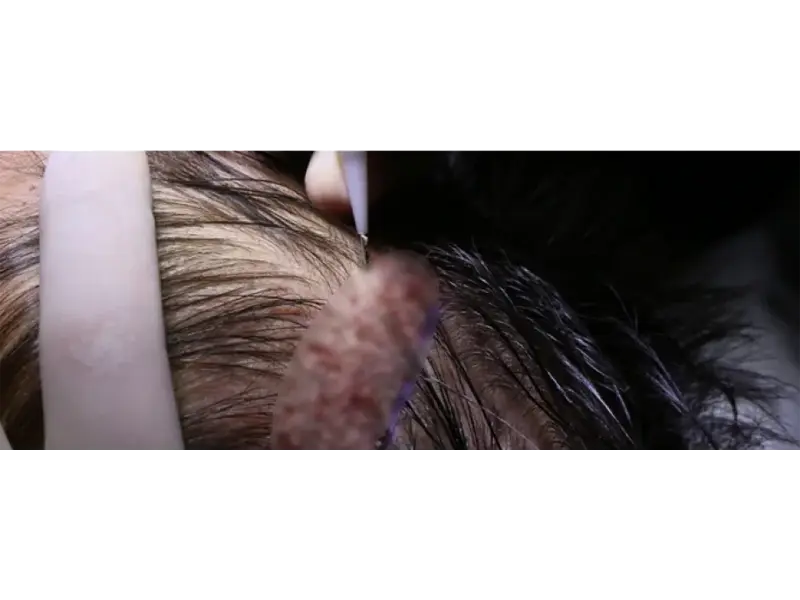
In DHI, the implanter pen makes the opening and releases the graft in one movement. The operator places each graft in the space that exists, between the hairs that are already growing. That is the whole reason DHI is the technique of choice for densification.
| Sapphire FUE | DHI | |
|---|---|---|
| Risk to existing hair | Channel opening can catch it | Placed around it |
| Shaving | Normally full shave | Often avoidable |
| Grafts per session | 2,000–4,500 | 1,500–2,500 |
| Best use | Rebuilding a bald area | Densifying a thinning one |
The hard question
Is your remaining hair stable?
Here is the part that separates a plan that ages well from one that does not.
If the native hair in the area is itself on its way out, then in a few years you are left with the transplanted grafts standing in a field where everything else has gone. The result was fine at month eighteen and looks wrong at year five. Not because the transplant failed, but because it was planned against a moving target.
- How fast has it changed? Thinning that has moved noticeably in the past year is a different proposition from thinning that has looked the same for five.
- Is the cause established? Diffuse thinning has causes other than pattern loss, and some of them are addressable.
- Is medical treatment part of the plan? Stabilising what you have is a question for a physician, and it changes what a transplant is being asked to do.
- What is the donor capacity? It is finite and spent once. Using it on an area that will need covering again later is the decision people most regret.
What is realistic
What densification does and does not achieve
What it does
- Reduces how much scalp shows through in the treated area
- Rebuilds a frontal hairline edge that has thinned
- Works without shaving, in many cases
- Keeps your existing hair rather than replacing it
What it does not do
- Stop your native hair from thinning further
- Restore the density you had at twenty
- Cover a large area in a single session
- Produce a result you can judge before month twelve
The target density of 45–55 grafts/cm² is the same as in any other placement. Combined with the hair you still have, that is what closes the gaps. The aim is a scalp that no longer shows through, not the density of untouched hair.
| Period | What happens |
|---|---|
| Days 1–3 | Swelling and redness. The first wash is done with you before you fly home. |
| Days 4–10 | Crusts form and come away with the prescribed washing routine. |
| Weeks 2–8 | The transplanted hairs shed. Expected, the follicle stays. |
| Months 3–4 | New growth starts, fine and uneven at first. |
| Months 6–9 | Density builds. |
| Months 12–18 | The final result. |
Free assessment
The photographs that answer this
Densification is harder to judge from photographs than a bald area, so it is worth sending them properly: top, front, side and back, in daylight, without product in the hair, and one under bright overhead light where the scalp shows through most. Say how long it has been changing.
You will receive your donor capacity, an estimated graft count, whether DHI or Sapphire FUE fits your case, and an itemised written quotation. If the answer is that your hair is not stable enough yet, that is what you will be told.

Free pre-analysis
Start your personal assessment
Leave your number and our coordination desk will call you back, usually the same day.
Frequently asked questions
Can I have a hair transplant if I am not bald?
Yes. Placing grafts between hair you still have is called densification, and it is usually done with DHI so that no channels are cut through your native hair. The question that matters is whether the remaining hair is stable enough for the result to still make sense in a few years.
Will the transplant damage the hair I still have?
That is precisely the risk DHI is used to avoid here: the implanter pen places each graft in the space between existing hairs rather than cutting a channel through the area. Some temporary shedding of native hair in the treated area can still happen and typically recovers.
How many grafts does densification take?
Typically 1,500–2,500 in a DHI session. The number for your case follows the assessment. It depends on the area and on how much hair is still growing in it.
Do I have to shave my head for densification?
Often not, which is one of the reasons DHI suits this situation. Whether an unshaven session is realistic at your graft count is a clinical judgement. the unshaven transplant guide covers what decides it.
Will my remaining hair keep thinning after the transplant?
A transplant moves hair; it does not stop loss in your native hair. That is exactly why the stability of what you still have is assessed before a densification plan is agreed, and why medical treatment alongside it is a question for a physician.
Is it better to wait until I am more bald?
Sometimes, and an honest assessment will say so. Waiting is not automatically right either. The trade-off is between planning against hair that may go and spending finite donor capacity twice. It is a judgement made on your donor area and your rate of change.
How do I photograph thinning hair properly?
Top, front, side and back, in daylight, with no product in the hair, plus one under bright overhead light where the scalp shows through most. Mention how long it has been changing. The rate matters as much as the current state.
When will I see the result?
Shedding of the transplanted hair happens in weeks 2–8, new growth starts around months 3–4, density builds through months 6–9 and the final result is at 12–18 months. Densification is judged on the same timetable as any other placement.
Related pages
Free pre-analysis
Start your personal assessment
Leave your number and our coordination desk will call you back, usually the same day.
- Our own Ministry-licensed clinics
- Authorisation certificate AK-0604, verifiable
- Clinic named in writing before you travel
- Sapphire FUE and DHI techniques
- Airport pickup, hotel and transfers
- Follow-up at months 1, 3, 6 and 12
Your enquiry is handled by our coordination desk, in your own language.